Main caveat
Great native app stack, but A/B testing and ad tooling still usually need outside services or custom setup.
Alphabetical benchmark profile
Fast MVPs, SaaS prototypes, client apps, and teams that want full-stack generation without assembling many services first.
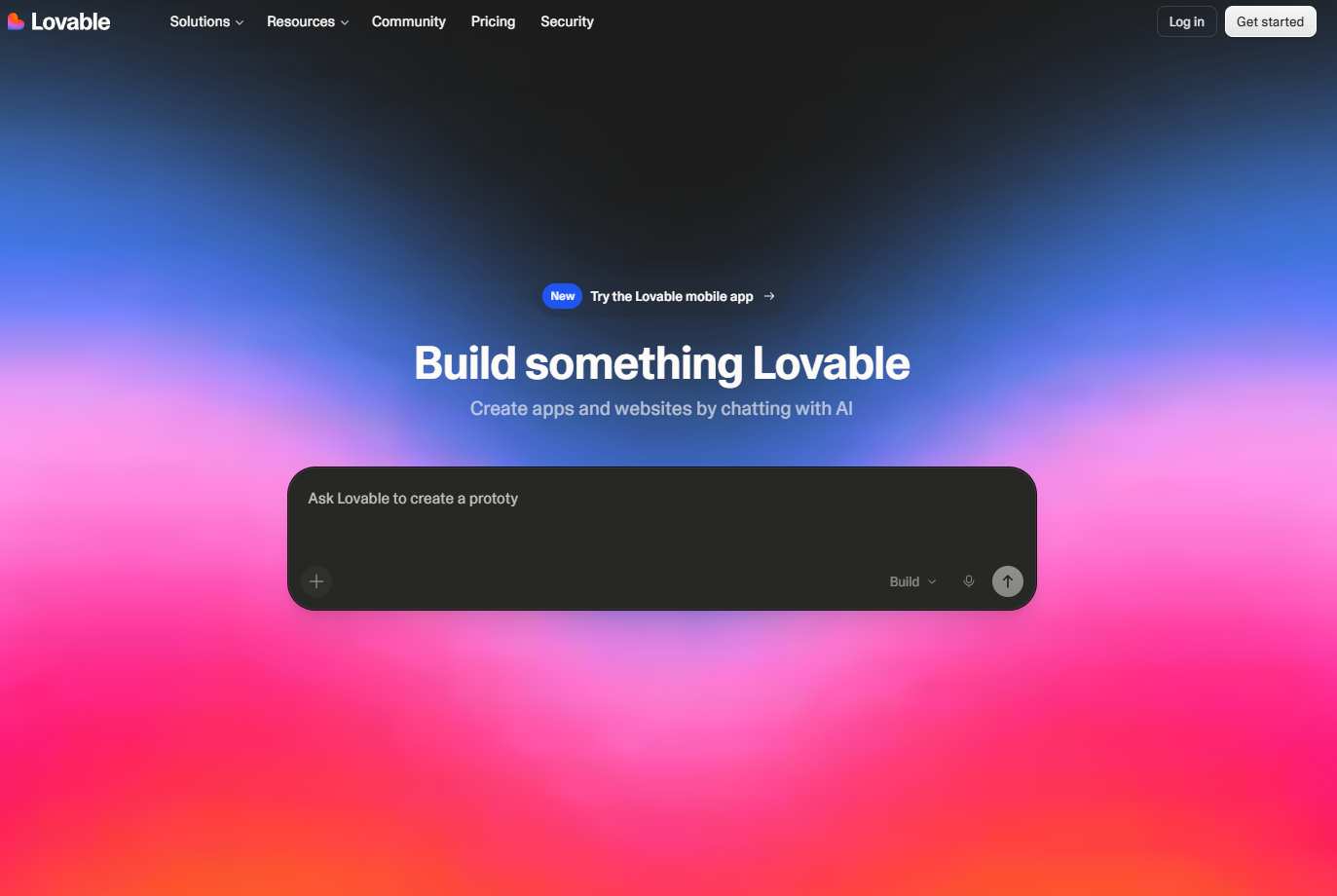
Lovable is best for Fast MVPs, SaaS prototypes, client apps, and teams that want full-stack generation without assembling many services first. Main caveat: Great native app stack, but A/B testing and ad tooling still usually need outside services or custom setup.
Official source domains reviewed 2026-04-28. Page last reviewed 2026-04-30.Fast MVPs, SaaS prototypes, client apps, and teams that want full-stack generation without assembling many services first.
Great native app stack, but A/B testing and ad tooling still usually need outside services or custom setup.
lovable.dev, docs.lovable.dev
| Question | Report verdict and notes |
|---|---|
| Do I need coding knowledge? | No for basic use; code is helpful for advanced polishing. You can start from natural language and keep iterating without being a developer. |
| Database integration | Native. Lovable Cloud includes a built-in database plus auth, storage, and backend services, so you do not need a third party to get started. |
| A/B testing integration | No official native A/B testing feature found in the docs reviewed. Use third-party experimentation tools or custom logic if you need traffic-splitting tests. |
| Ecommerce integration | Official payments support is available through Stripe and Paddle. That covers checkout and billing use cases, though a full store setup may still need app-specific work. |
| Ad integration | Third-party/manual. Ad networks are not a core built-in Lovable feature. |
| SEO integration | Native. Lovable documents support for SEO and GEO basics such as metadata, sitemaps, structured data, and performance-minded output. |
| Analytics integration | Native. Lovable includes project analytics, so you do not have to bolt on a separate analytics stack just to get basic visibility. |
| Can I build by typing a prompt? | Yes. Prompting is a core workflow. |
| Can I edit an existing project with a prompt? | Yes. You can continue editing and extending a project with follow-up prompts. |
| Do I need to buy a domain to go public? | No. You can publish to a Lovable-hosted URL first; a custom domain is optional for a branded launch. |
| How publishing works | Publish to a hosted lovable.app URL, then optionally connect a custom domain on supported plans. Hosting is handled for you. |
| Can I build video games? | Yes, but mainly simple browser games, quizzes, and simulations. It is not a specialized game engine. |
| Can I build surveys that save responses? | Yes. Form-based apps and surveys can save responses to the built-in backend. |
| Can I build multi-user web apps? | Yes. Built-in auth and backend services make multi-user apps realistic. |
| Can I share projects/apps easily? | Easy. Share a live URL and collaborate on the project. |
This profile uses the source spreadsheet row for Lovable and the official domains reviewed on 2026-04-28: lovable.devdocs.lovable.dev.
The best-fit summary, caveat, database, A/B testing, ecommerce, ads, SEO, analytics, prompt workflow, publishing, survey, multi-user app, and sharing answers come from the same structured source row.
No for basic use; code is helpful for advanced polishing. You can start from natural language and keep iterating without being a developer.
Native. Lovable Cloud includes a built-in database plus auth, storage, and backend services, so you do not need a third party to get started.
No official native A/B testing feature found in the docs reviewed. Use third-party experimentation tools or custom logic if you need traffic-splitting tests.
Official payments support is available through Stripe and Paddle. That covers checkout and billing use cases, though a full store setup may still need app-specific work.
Third-party/manual. Ad networks are not a core built-in Lovable feature.
Native. Lovable documents support for SEO and GEO basics such as metadata, sitemaps, structured data, and performance-minded output.
Native. Lovable includes project analytics, so you do not have to bolt on a separate analytics stack just to get basic visibility.
Yes. Prompting is a core workflow.
Yes. You can continue editing and extending a project with follow-up prompts.
No. You can publish to a Lovable-hosted URL first; a custom domain is optional for a branded launch.
Publish to a hosted lovable.app URL, then optionally connect a custom domain on supported plans. Hosting is handled for you.
Yes, but mainly simple browser games, quizzes, and simulations. It is not a specialized game engine.
Yes. Form-based apps and surveys can save responses to the built-in backend.
Yes. Built-in auth and backend services make multi-user apps realistic.
Easy. Share a live URL and collaborate on the project.
Compare it against tools in the same buyer path, especially the capability map and tools index.